Impact & field stories2 min read
Multilingual Agronomic Advice — Crop Diagnosis in 20+ Languages
Diagnosing 1,500+ conditions in 20+ languages isn't a nice-to-have. For smallholder farmers, language access is the difference between advice they can use and advice they can't.
Advice only helps if you understand it
The best crop diagnosis in the world is useless if it arrives in a language the farmer doesn't read. Yet most agricultural technology is built and delivered in a handful of dominant languages, quietly excluding the majority of the world's growers — many of them smallholder farmers working the fields where the margin between a good and bad season is thinnest.
Language access isn't a cosmetic feature bolted on at the end. It's a core part of whether a crop advisory tool actually reaches the people it's meant to serve. That's why DeepLeaf-Agronomist is built to diagnose and explain in 20+ languages from the start.
The scale of the challenge
Reaching farmers where they are means covering both breadth of knowledge and breadth of language at the same time:
- 1,500+ conditions — pests, diseases, nutrient deficiencies, and stress — recognized across 83+ crops.
- 20+ languages, so the diagnosis and the reasoning behind it arrive in the farmer's own words.
- A single photo as the only input required, keeping the barrier to entry low.
Covering conditions without covering languages would leave most of the world out. Covering languages without depth of agronomic knowledge would leave farmers with translations of shallow advice. Both have to hold at once.
Why multilingual AI agronomy is different from translation
It's tempting to think of this as a translation layer — diagnose in one language, then convert the text. But agronomic advice is full of local specifics: the common name of a pest, the way a symptom is described, the crop varieties that matter in a given region. A genuinely multilingual model reasons in a way that respects those specifics rather than flattening them into a literal translation.
Meeting farmers on their own devices
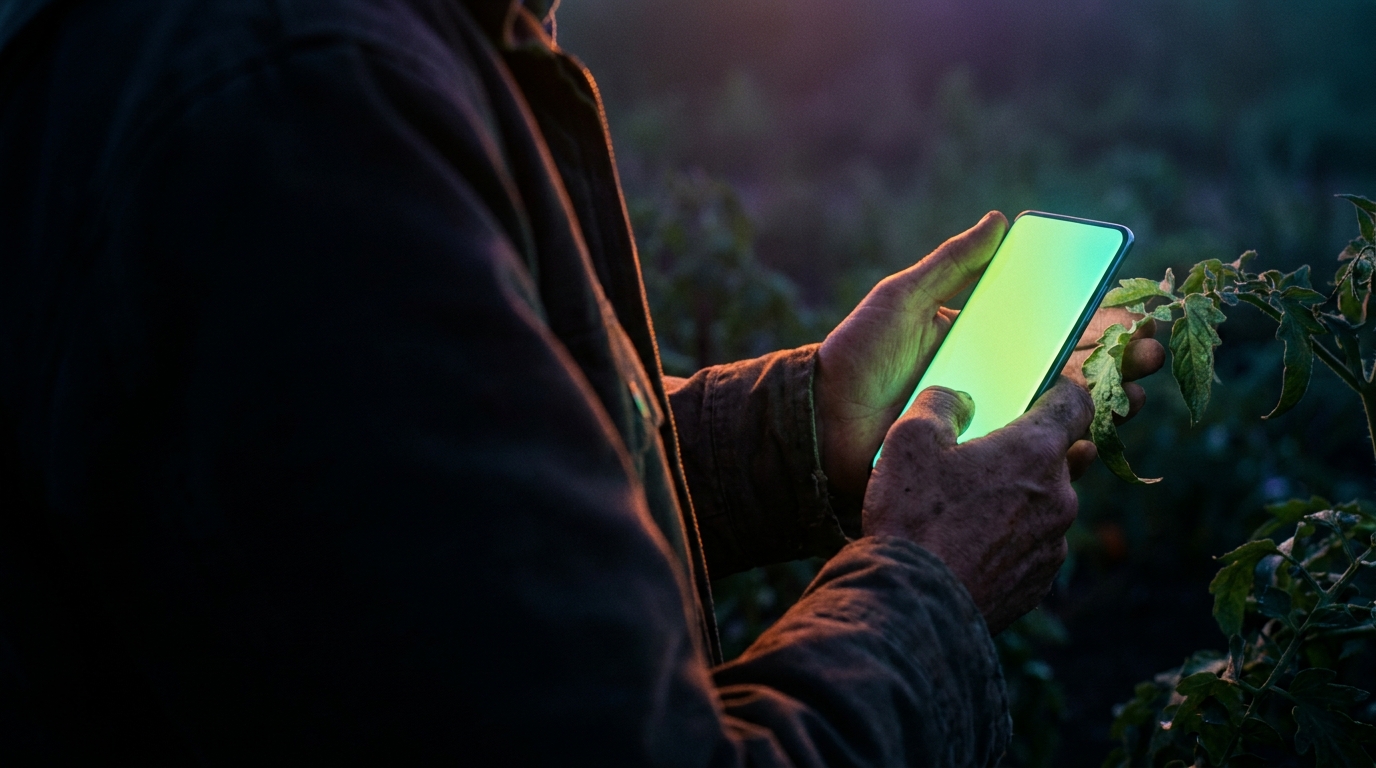
Smallholders overwhelmingly reach the internet through a phone. Advice that lands as clear, spoken-language guidance on that phone — in the language they think in — is advice they can act on immediately, without an intermediary to interpret it.
Grounded in the local field
Language is one half of relevance; local conditions are the other. A diagnosis phrased in the right language still has to fit the field in front of the farmer. By drawing on field context from the DeepLeaf Data Hub — local weather, soil, and canopy signals — the advice reflects not just the right language but the right place.
Language access as equity
There's a fairness dimension here that's easy to overlook. When advanced crop intelligence is available only in a few languages, it compounds existing advantages: well-resourced growers get smarter tools while smallholders are left with less. Building multilingual AI agronomy from the ground up is a deliberate choice to narrow that gap rather than widen it.
The takeaway
Diagnosing 1,500+ conditions in 20+ languages is what it takes to make crop advisory genuinely global. For smallholder farmers, that reach turns AI from a promise into practical help — in their crop, their field, and their language.
Want to bring multilingual crop intelligence to the farmers you work with? Get in touch.